Love Letters to Mend My Ancestors' Souls
Work in Progress
Statement
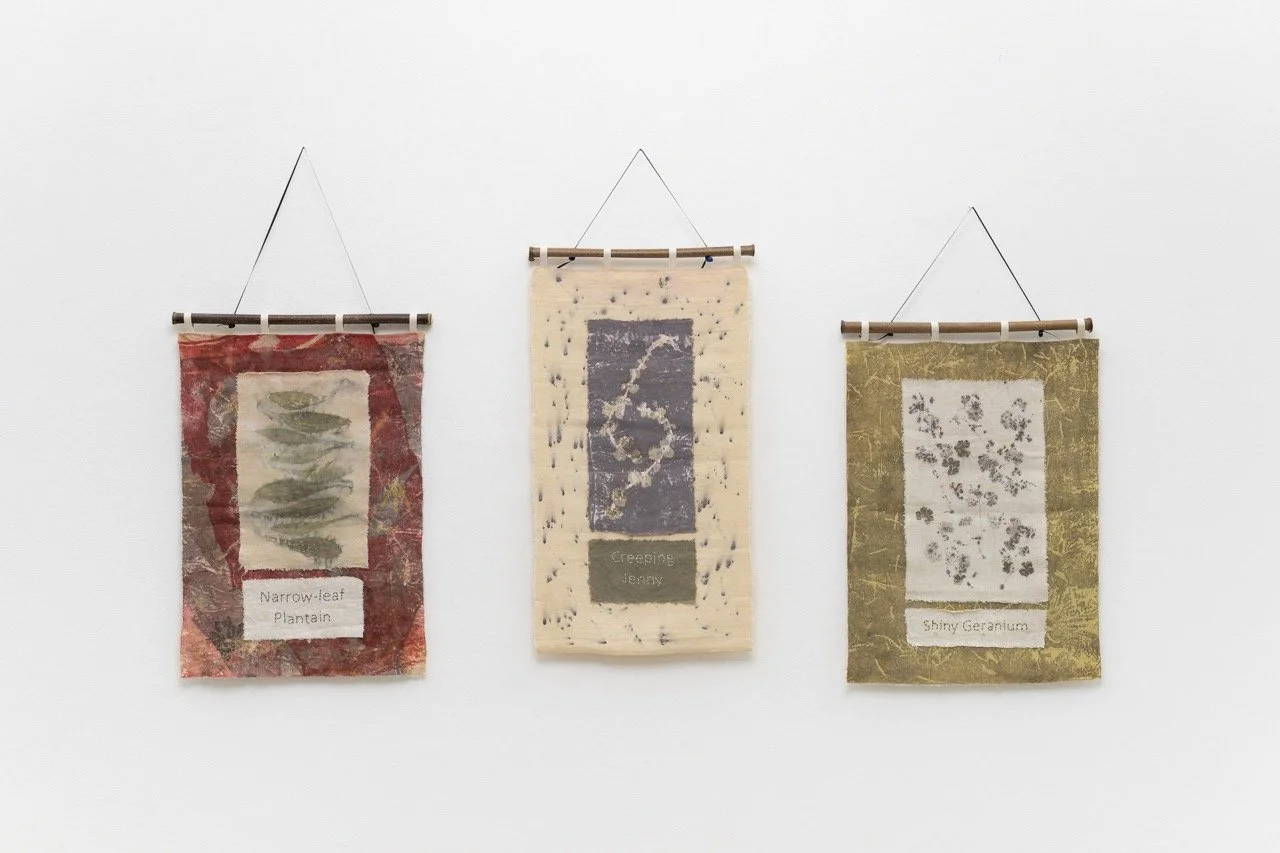
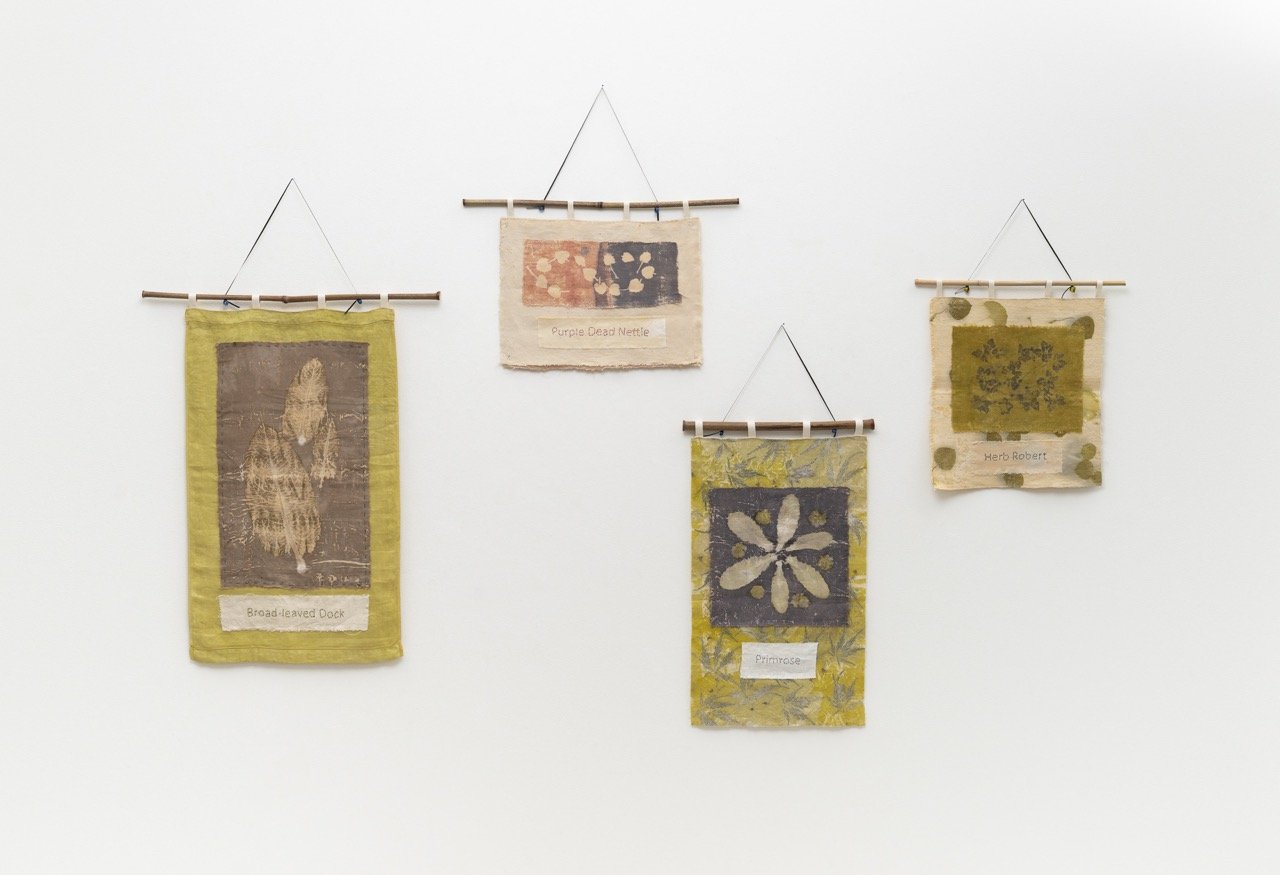
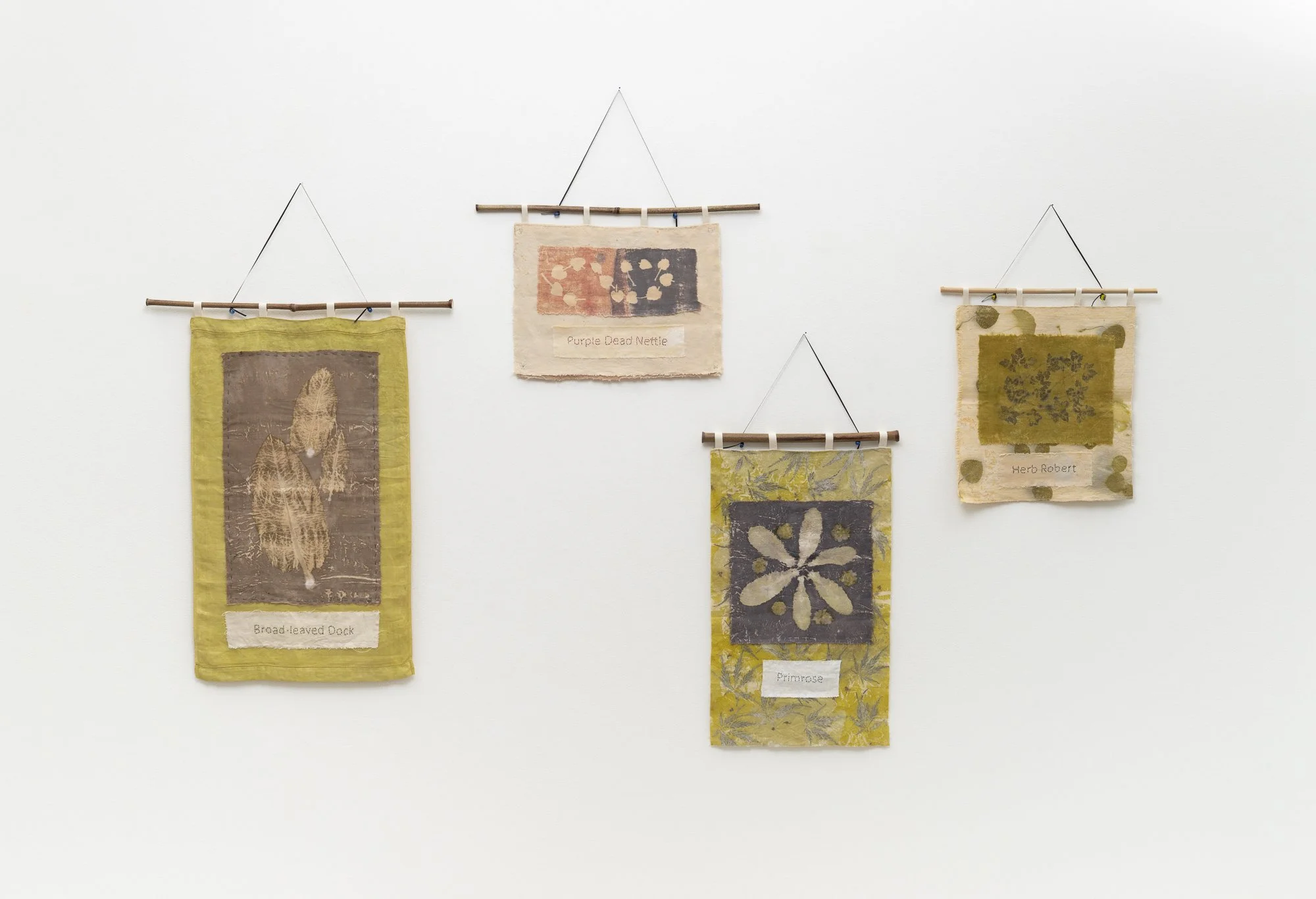
The project consists of 10-12 botanical contact prints on fabric of plants that originated in Europe and are now common in Oregon accompanied by written love letters to each plant. The purpose is to understand and heal the colonizer's loss of home through reconnection with those plants. These plants, like human settlers, spread throughout the continent and are now largely labeled invasive since their adaptability allows them to outcompete with native species. With this knowledge we can regard neighborhood plants with new eyes and have more empathy and connection to our ancestors, a step towards healing generational trauma and grief, and their contribution to white supremacy.
This practice follows the seasons as Mavor observes the plants volunteering in her yard and on roadsides. Each time she notices a new plant, learns its colonizer origins, and lovingly prints its image on fabric feels like another hole stitched together in her ancestors’ souls. The connection between Anne and her lost ancestral homeland has been restored. These small stubborn plants that made their way across the continent are relatives. They kept her ancestors alive for centuries and still have a place on the planet. Printing images and writing love letters to each plant seals and documents this healing relationship.
Herb Robert Geranium Robertianum
Notes: Native to temperate northern hemisphere, primarily Europe, north Africa, and as far east as Russia. Regarded as an invasive weed in western North America. In folk medicine, used to treat diarrhea, liver, gallbladder, toothache, and nosebleeds. Freshly picked leaves rubbed on the body may repel mosquitoes.
Dear Herb Robert,
I searched for you for years before I finally met you. I heard that you were invasive and stinky and needed to be eradicated completely. But somehow, I never smelled anything bad around you. I think that you are beautiful. I love your dark green lacy leaves and red stems that break with a satisfying snap when I gather them. I adore how you print: consistent, distinct, and dark gray, the result of your rich tannins. You seem delicate since you’re so easy to pull up in the garden and seem to disappear in late summer. When you resurface in the rainy fall, I am relieved to see you spreading over the ground. I want you to have another name that honors your elegance and strength. Your purple star flowers, red stems, and leaf shape are magnificent to me. I dub you Starfire.
Your fan,
Anne
Heartsease Viola tricolor
Notes: European wildflower also known as wild pansy, johnny jump up and many other names. Introduced to North America where it spread widely. Used for millennia as a medicinal herb in ancient Greek, Arab, Celtic, Ayervedic, and Chinese traditional healing.
My Dear Heartsease,
How is it that a miniature flower like you decided to grow here in our garden? You popped up all spring and summer before I finally took proper notice of you. Since you came with pretty purple, white, and yellow petaled flowers, I let you stay. You are small but powerful, I learned, with your robust self-seeding and creeping practice sending you near and far. No wonder you likely accompanied my English ancestors to North America just like a family member. Your print shows a negative shape since your acidic leaves and stems bleach color. I look forward to seeing you appear again in spring.
Your sister forever,
Anne
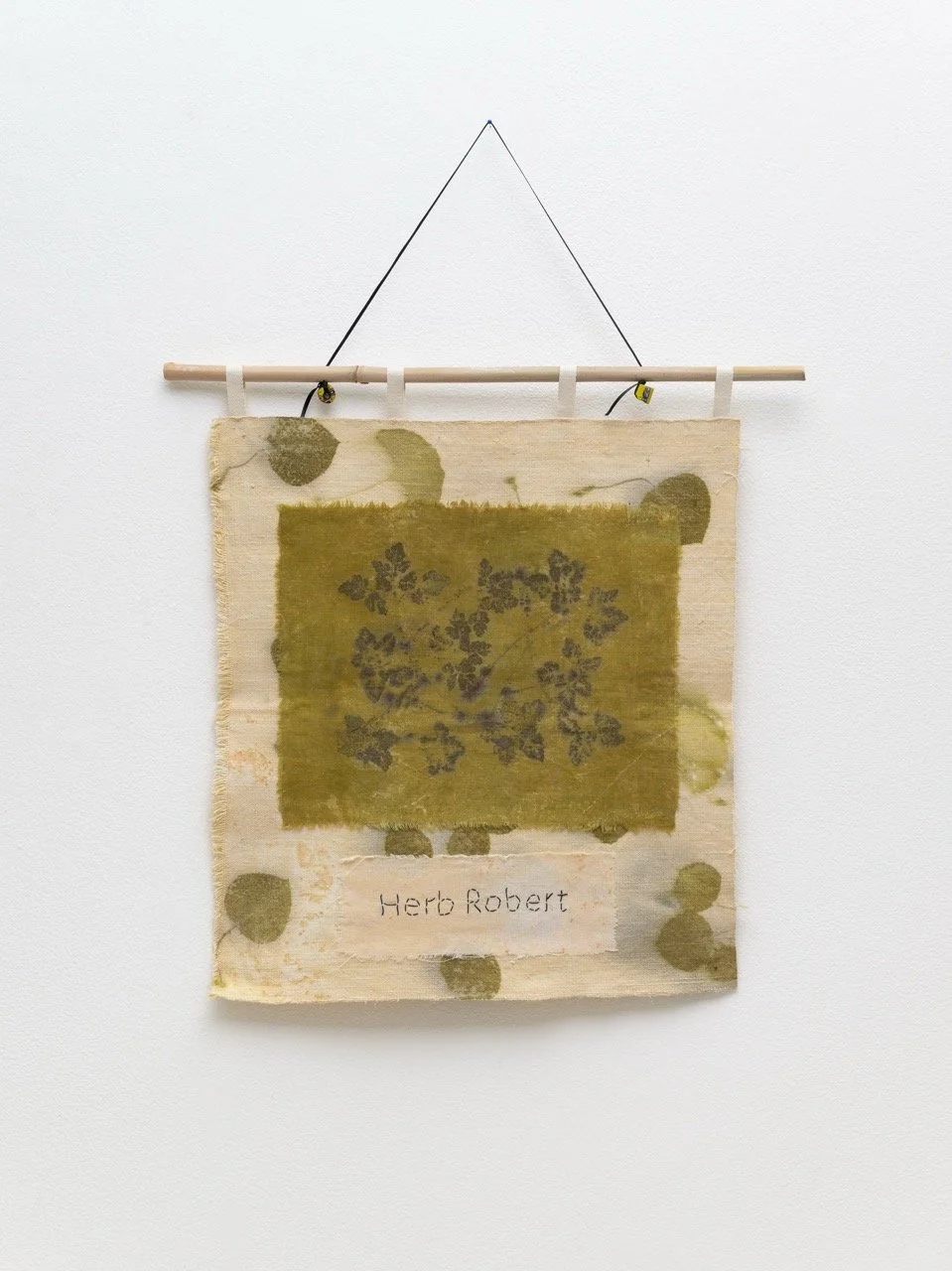
Herb Robert, 2026, 17" x 16.75", botanical contact print, linen, hemp canvas, bamboo
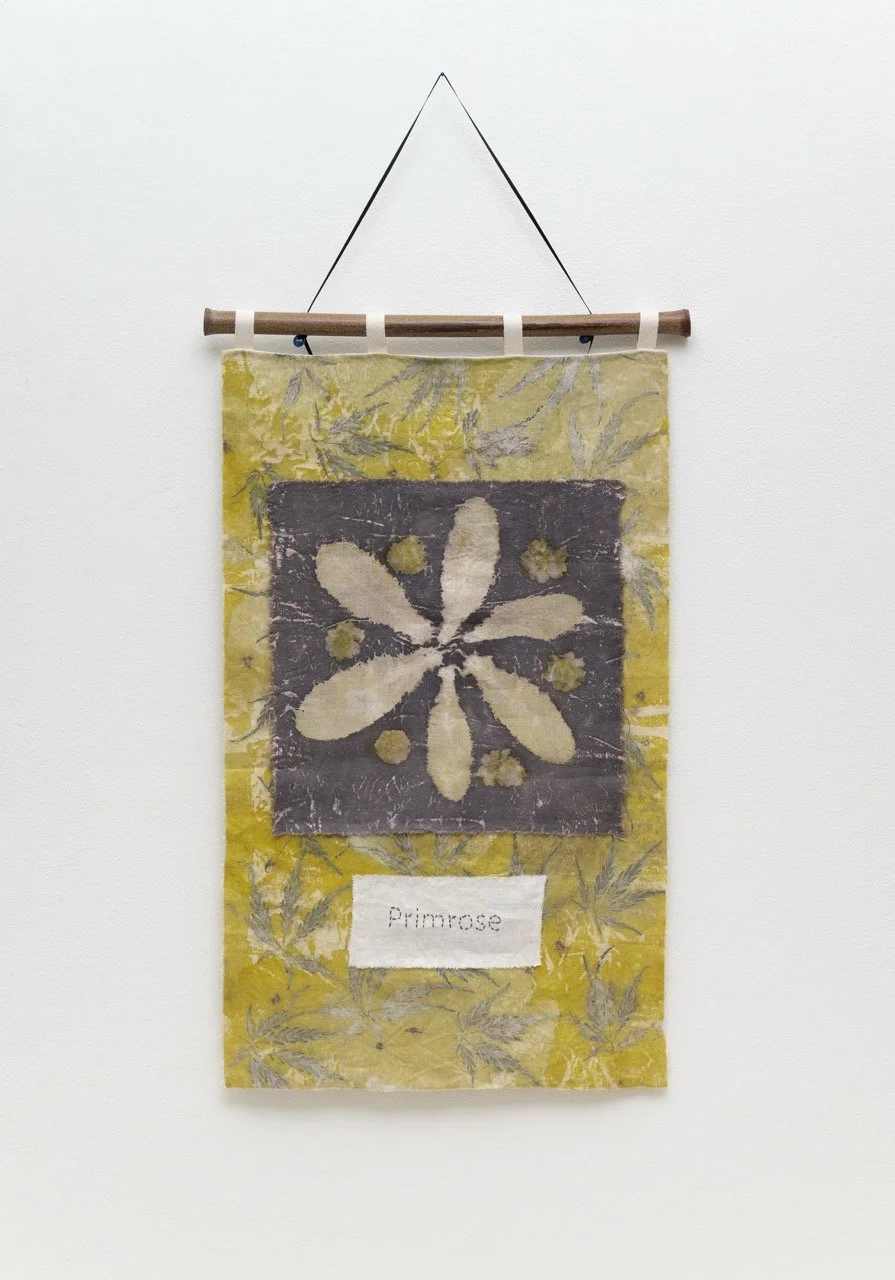
Primrose, 2026, 24.75" x 15.5", botanical contact print, linen, cotton, bamboo
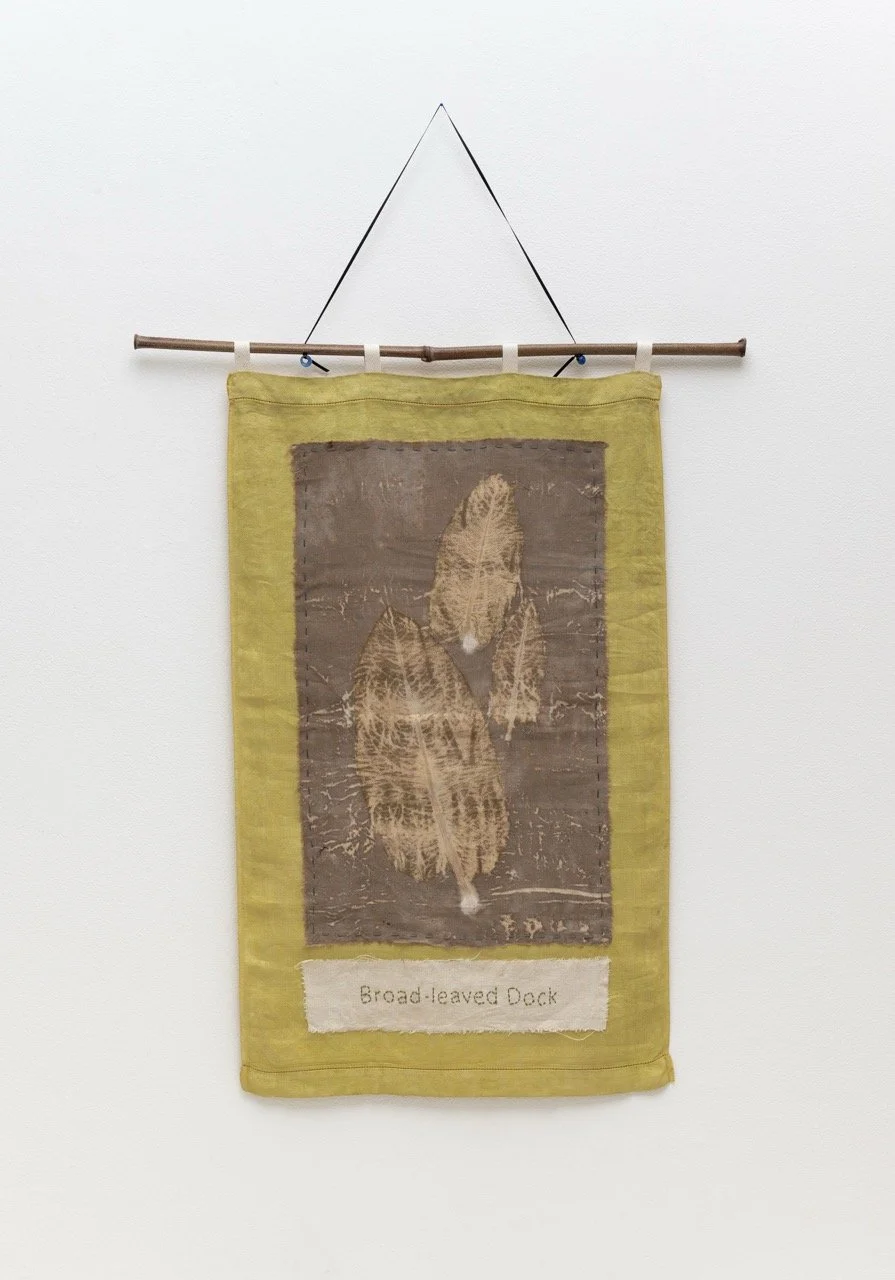
Broad-leaf Dock, 2026, 30" x 17.5", botanical contact print, linen, bamboo
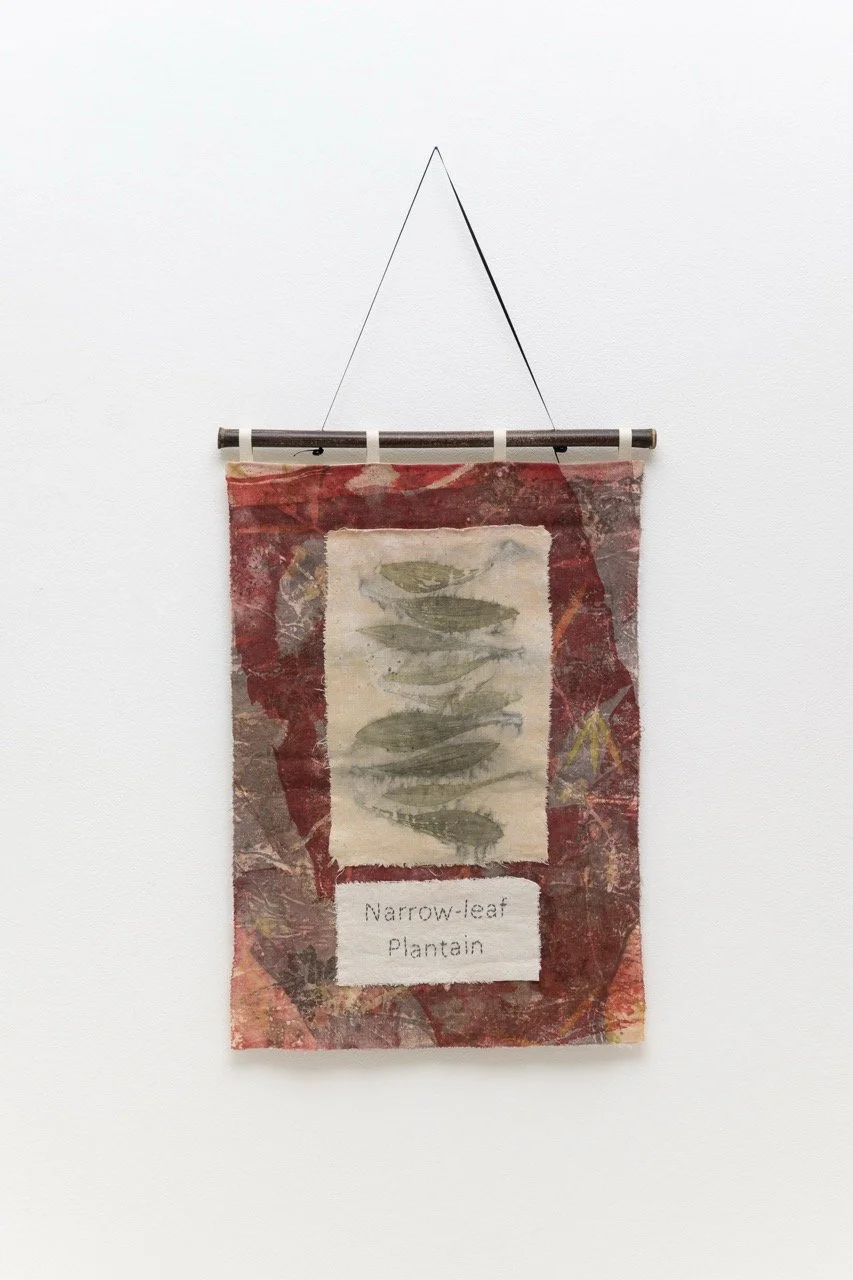
Narrow-leaf Plantain, 2026, 22.5" x 15.75", botanical contact print, linen, bamboo
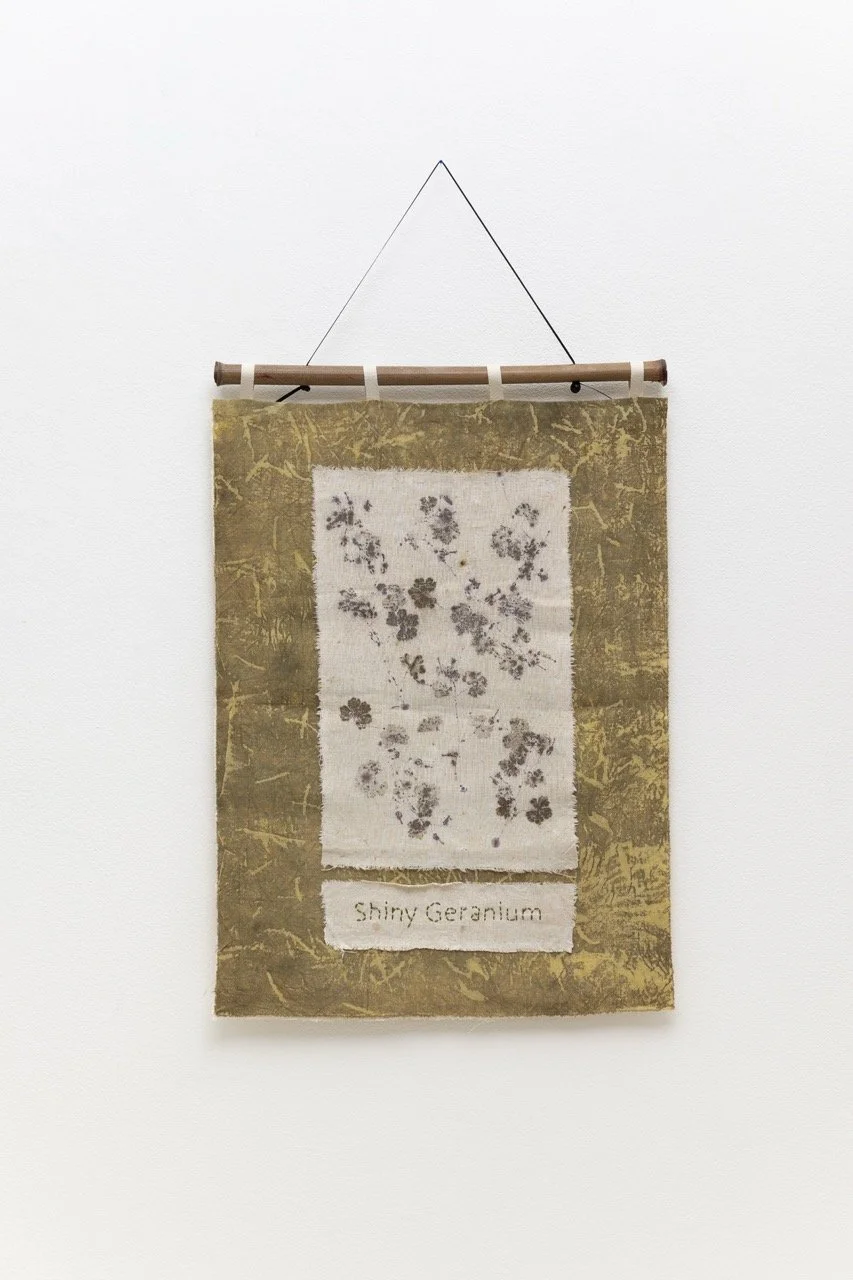
Shiny Geranium, 2026, 22.5" x 15.75", botanical contact print, linen, bamboo
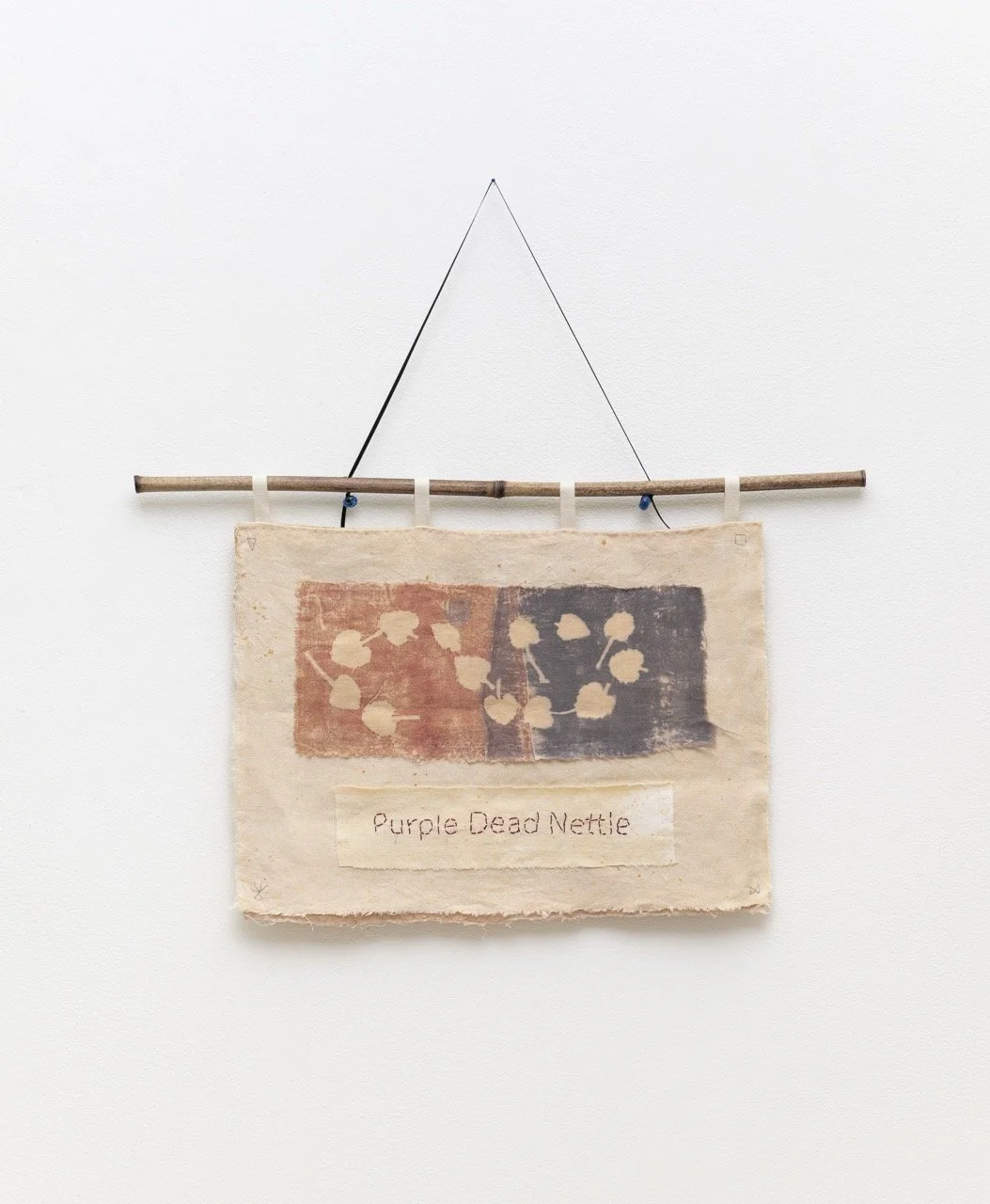
Purple Dead Nettle, 2026, 13.5" x 22", botanical contact print, linen, hemp canvas, bamboo
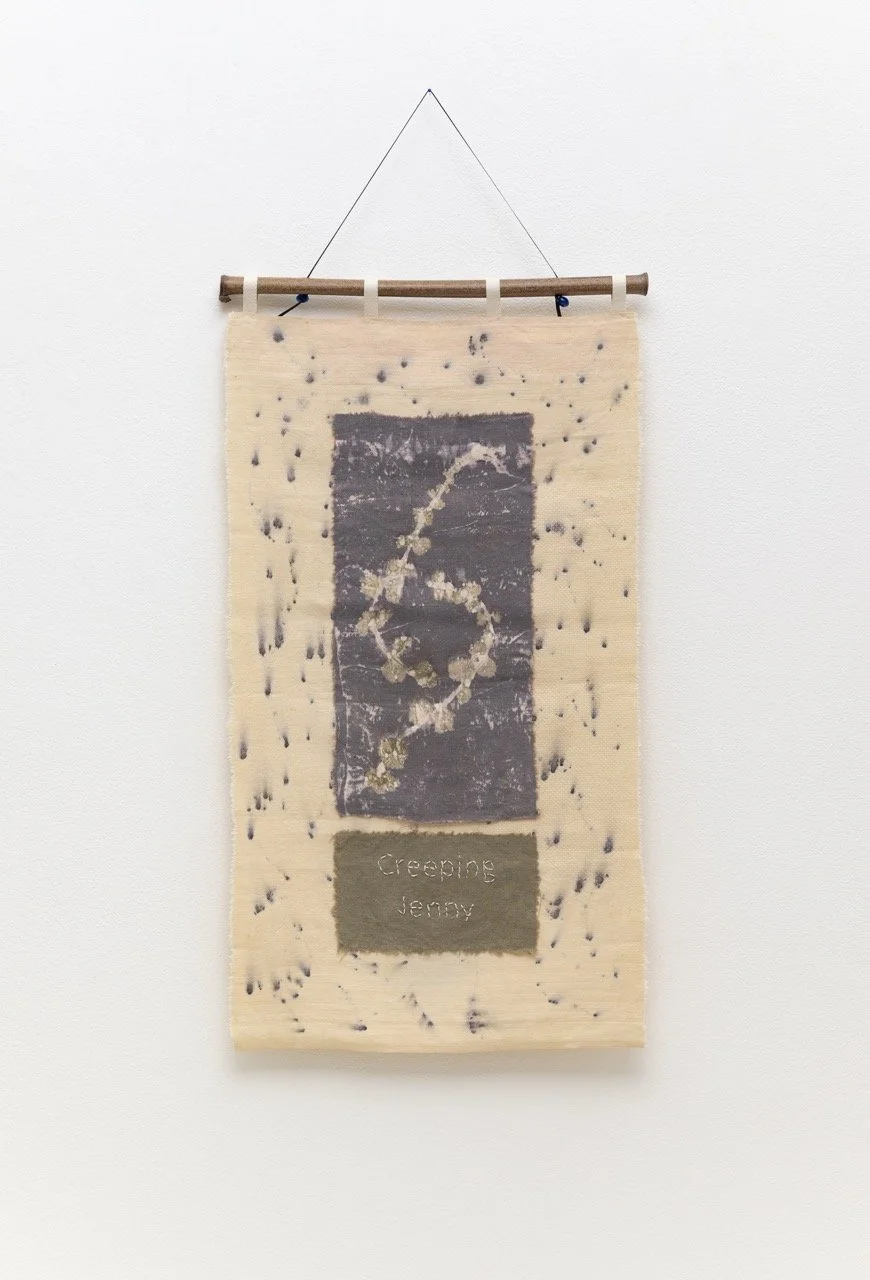
Creeping Jenny, 2026, 25.5" x 13.75", botanical contact print, linen, bamboo